
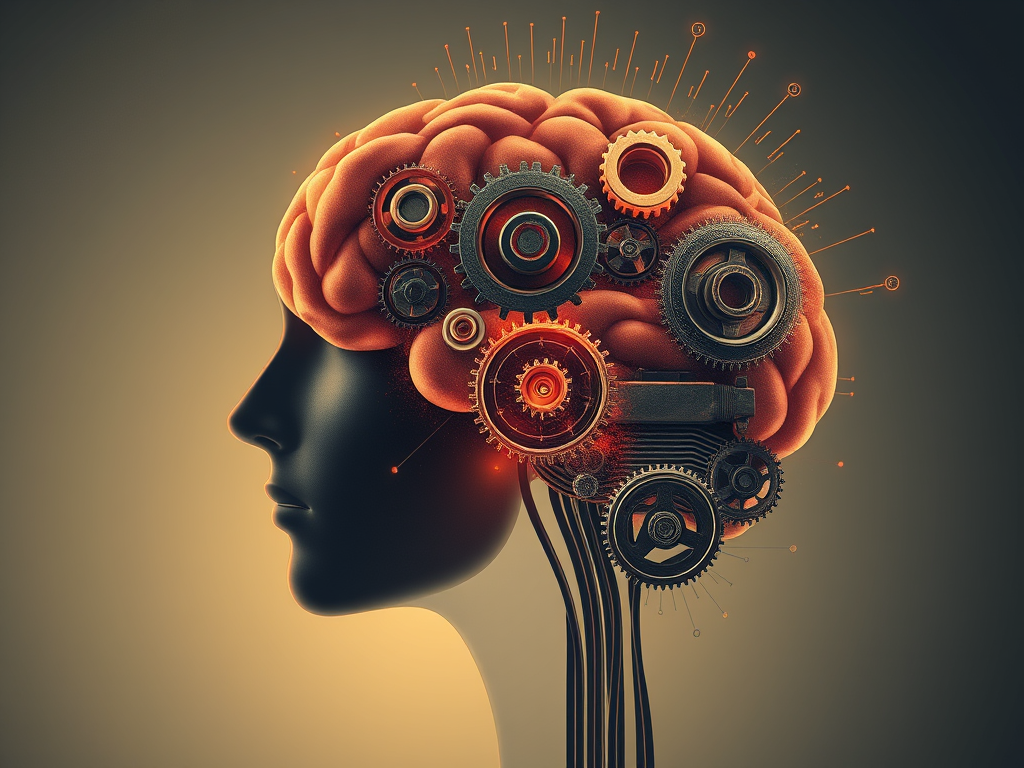
AI and the Critical Thinking of Students: A New Partnership for Deeper Learning
In the rapidly evolving world of education, the intersection of Artificial Intelligence (AI) and critical thinking has emerged as both a challenge and an opportunity. As classrooms adopt AI-powered tools, a key question arises: Will these technologies enhance or hinder the development of students’ critical thinking skills?
Rather than choosing between technology and cognition, educators and researchers now recognize the powerful potential of AI as a catalyst for nurturing students’ ability to think critically, solve complex problems, and make reasoned decisions.
Understanding Critical Thinking in the AI Era
Critical thinking refers to the capacity to analyze information objectively, question assumptions, evaluate evidence, and reach logical conclusions. It is one of the most essential competencies in the 21st century—needed for academic success, informed citizenship, and future work environments.
In the digital age, students are bombarded with information at every turn. The ability to think critically is no longer optional—it is crucial for navigating misinformation, interpreting data, and making ethical choices in a world shaped by algorithms and automation.
Can AI Support the Development of Critical Thinking?
While some fear that AI tools will encourage passivity or surface-level thinking, the reality is more nuanced. When used thoughtfully, AI can support and amplify students’ critical thinking in multiple ways:
1. Encouraging Inquiry and Exploration
AI tools such as chatbots or AI tutors can simulate Socratic questioning, prompting students to ask deeper questions, justify their reasoning, and explore alternative perspectives. For example, tools like ChatGPT or Socratic by Google can challenge students to refine their arguments or clarify their ideas, mirroring the feedback they would receive from an insightful teacher.
2. Analyzing Data and Patterns
AI systems can help students engage in data-driven reasoning, a form of critical thinking grounded in real-world evidence. By working with AI platforms that allow students to collect, visualize, and interpret data—such as Google’s Teachable Machine or AI4K12 tools—learners can practice identifying patterns, making predictions, and drawing logical conclusions.
3. Scaffolding Reflection
Some AI tools are designed to prompt metacognitive thinking—guiding students to reflect on their thought processes, learning goals, and decisions. This reflection enhances critical thinking by helping students monitor their biases, evaluate their reasoning, and become more self-aware learners.
Key Strategies for Using AI to Develop Critical Thinking
To make the most of AI in promoting critical thinking, schools and educators must adopt intentional strategies. Here are four evidence-informed approaches:
a. Design Tasks That Require Judgment, Not Just Recall
AI should not be used to automate thinking. Instead, teachers can design learning experiences that ask students to compare perspectives, debate ethical dilemmas, or analyze causes and effects using AI as a research or feedback tool.
b. Use AI as a Thinking Partner, Not a Replacement
Rather than providing final answers, AI can act as a co-pilot that encourages brainstorming, offers alternative views, or raises questions students hadn’t considered. For instance, students might ask an AI to play the “devil’s advocate” role in a debate or suggest counterarguments to their claims.
c. Teach AI Literacy Alongside Critical Thinking
Students need to understand how AI works, its limitations, and how to evaluate the information it provides. Teaching AI literacy—including the concepts of bias, data sources, and algorithmic transparency—naturally leads to deeper critical engagement.
d. Integrate Reflection Activities
Educators can design post-AI tasks that require students to reflect on how AI influenced their thinking: What new ideas did it generate? What biases might it have reinforced? How would they approach the task differently next time?
Risks to Monitor: Avoiding Cognitive Shortcuts
While AI offers opportunities, it also poses risks to critical thinking if misused:
- Over-reliance on AI can reduce students’ willingness to grapple with complex problems or engage in productive struggle.
- Surface-level answers provided by some AI tools may mislead students into accepting incomplete or biased responses.
- Ethical disengagement can occur if students treat AI as a neutral source of truth, rather than a tool shaped by human decisions and values.
These risks underscore the importance of teacher guidance, critical media literacy, and structured use of AI in educational settings.
Real-World Applications and Examples
Several schools and educators have begun piloting innovative uses of AI to support critical thinking:
- In STEM classes, students use AI-based simulations to test hypotheses, adjust variables, and defend their conclusions with evidence.
- In humanities, AI tools are used to analyze historical documents, extract themes, and compare interpretations, helping students develop nuanced perspectives.
- In writing programs, students use AI tools for peer-review simulations, where they receive AI-generated feedback and must decide which suggestions to accept, reject, or question.
Each of these examples shows how AI can serve as a mirror, a mentor, or a challenger—depending on how it is implemented.
A Call for Educator Leadership
The future of critical thinking in the AI era will depend not on the technology itself, but on how educators lead its integration. Teachers are the architects of learning experiences—and with the right design, AI can be a powerful ally in building thoughtful, reflective, and analytical learners.
Educational leaders and curriculum designers should:
- Prioritize professional development that helps teachers understand AI and design AI-enhanced critical thinking tasks.
- Advocate for policies that emphasize ethical AI use, student agency, and critical literacy.
- Promote a culture where questioning, curiosity, and reflection are valued as much as speed and efficiency.
Conclusion
AI and critical thinking are not opposites—they can be powerful partners. When used wisely, AI can help students become more curious, analytical, and independent thinkers. It can open doors to deeper learning, richer dialogue, and more informed decision-making.
The challenge for today’s educators is to embrace AI not as a crutch, but as a catalyst—a tool that, when paired with thoughtful pedagogy, helps students build the critical thinking skills they need to navigate a complex, AI-powered world.
 Vietnam Center for Creative Education
Bình luận về bài viết này